

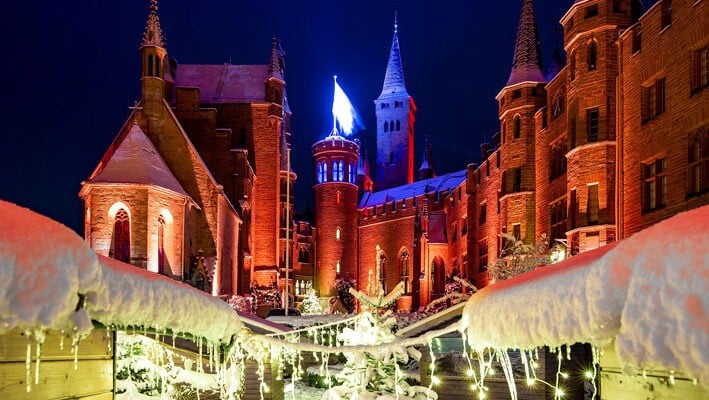
Follow your star to Germany, Austria and Switzerland to explore history and experience a market culture that will wrap you in a loving “home for the holidays” feeling.
By Ella Mercer
The land that gave us Christmas trees and many of our most cherished Yuletide traditions celebrates the season with exceptional flair and fervor. Germans, after all have been decorating evergreens since the 8th century when St. Boniface, an English missionary, started the tradition replacing sacrifices to Wotan’s sacred oak with a fir tree dedicated to the Christ Child. By the 16th century Martin Luther added lighted candles to the tree, German emigrants introduced it to the New World.
Germany’s Christmas Market tradition dates to the 14th century when it was customary for craftsmen—toy makers, wood carvers, candle makers, bakers, and basket weavers—to set up booths in front of the largest local church in the weeks leading up to Christmas. Many practical items such as tools, functional clothing and household implements were for sale as well as plenty of items to delight the heart and holiday appetites from children’s toys to macaroons, Lebkuchen (particularly in Nuremberg), and other baked confections. Churchgoing was a daily routine then and everybody— town and country folk, farmers and noblemen—passed by these strategically placed stalls.
To read more subscribe now! Click here!